




For OTs, physios & support coordinators
Choosing a pressure care mattress comes down to three things: the person’s risk level, how much they can move in bed, and what the bed and the household can actually support. This guide sets out how each of those drives the choice between foam, hybrid, alternating air and low air loss surfaces.
The 5-step process
1
Start with the person
Risk category, mobility and what is driving the risk.
2
Decide reactive or active
The distinction that sets everything else.
3
Choose the category
Four families, from high specification foam to low air loss.
4
Check the specifications and the fit
Depth, weight limits, cover, pump and how it sits with the bed.
5
Document it for funding
What the funder needs to see, and in what form.
Step 1. Start with the person
A mattress is one part of a pressure injury plan. It does not replace repositioning, skin checks, nutrition or continence management. The assessment has to describe the person before it names a product. Work through these first:
- Risk level and how it was reached. Braden, Norton or Waterlow gives a score, but guidelines are clear the score alone should not decide the surface. Pair it with judgement about skin, perfusion, sensation, moisture and nutrition.
- Existing skin damage. Intact skin at risk, a healing early stage injury, or a deep cavity wound each point to a different surface.
- Ability to reposition. Can the person shift weight in bed alone, with prompting, with a rail or pole, or not at all? This is the biggest single driver between reactive and active surfaces. Pain on movement, high tone or a strong preference for a firm bed also affect tolerance of a moving surface.
- Time in bed. Twenty hours a day in bed is a very different load from eight hours and a day in a chair. If most of the day is seated, the cushion matters as much as the mattress.
- Weight and body shape. Both ends of the range cause trouble. Heavy clients bottom out or exceed the safe working load. Very light clients may not sink far enough into a firm reactive surface to gain any benefit.
- Moisture, heat and continence. Damp, warm skin tolerates less pressure, which drives the cover choice and whether microclimate management is worth paying for.
- The bed and the room. Bed type, rail use, transfer method, hoist access, power points and who sets the equipment up all narrow the field before you open a specification sheet.
Step 2. Decide reactive or active
Reactive surfaces only change shape in response to body weight. Foam, gel, static air and low air loss sit here. They reduce peak pressure by letting the body sink in and spreading load over a larger area. Nothing moves unless the person moves.
Active surfaces change pressure distribution on a cycle whether or not the person moves. In practice that means alternating pressure air: cells inflate and deflate in sequence so each part of the body is offloaded for part of every cycle.
Two terms decide how well a reactive surface performs. Immersion is how far the body sinks in. Envelopment is how closely the surface wraps around body contours and bony prominences without creating a ridge. A surface that immerses but does not envelop still concentrates load, and cover stretch affects envelopment as much as the foam does.

Step 3. Choose the category
High specification reactive foam
International guidance treats a pressure redistributing foam mattress as the default start for anyone assessed at risk. Castellated or multi-layer foam with a soft top and firmer base gives immersion without bottoming out, with no power and no noise.
Hybrid and reactive air
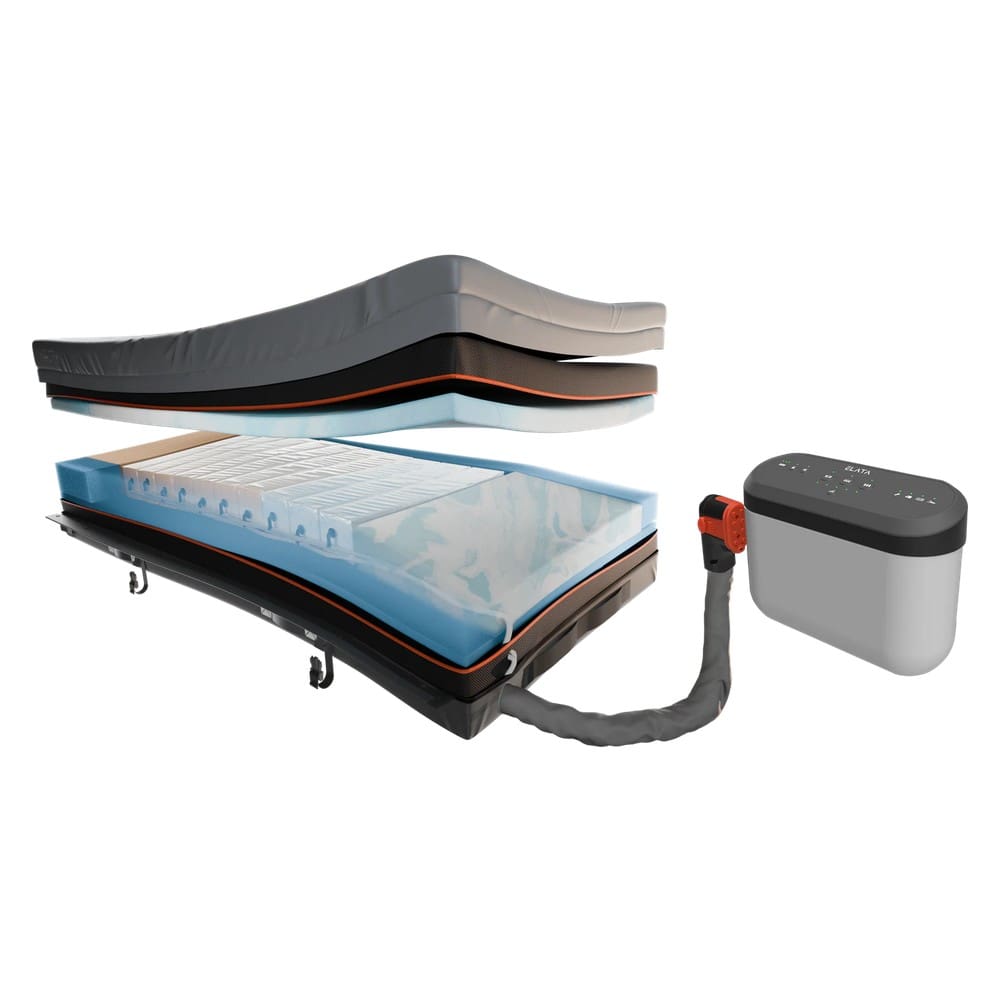
Hybrid surfaces combine foam with air cells, or self-adjusting air with a foam surround. They give deeper immersion than foam alone while staying static, and many run a pump that can switch to alternating mode if risk rises.
Alternating pressure air
Cells inflate and deflate in a cycle, often around ten to fifteen minutes end to end depending on the pump. Check for a static or transport mode for transfers and care tasks.
Low air loss and microclimate management
Low air loss moves a controlled flow of air through a vapour permeable cover to carry heat and moisture away from the skin.
Step 4. Check the specifications and the fit
- Bed platform size. Length, width and whether the bed profiles. The mattress must fit the platform and flex with it.
- Mattress depth. Record it, because it changes rail safety. Bed rail standards call for at least 220mm of rail height above the compressed mattress surface. A deeper mattress or an overlay cuts that clearance and can turn a safe rail into a fall risk. Measure the side gaps too: a mattress too small for the platform opens an entrapment gap.
- Safe working load. The user weight limit for the mattress, and separately for the bed. Note any minimum weight, which some air systems specify.
- Cover. A vapour permeable, fluid resistant top, multidirectional stretch for shear and envelopment, welded rather than stitched seams, and a zip protected against fluid ingress. Check which disinfectants it tolerates against the service’s cleaning protocol, and whether it can be replaced separately.
- Pump detail. Noise level if published, cycle time, whether pressure is set manually or adjusts automatically to weight and position, static and transport modes, the low pressure alarm, and where the CPR rapid deflation valve sits.
- Power failure behaviour. Ask what happens when the power drops out. Some systems hold air for a period, some rely on a foam or static air base layer, some deflate. In a rural home with an unreliable supply, a static base layer is a safety feature, not an extra.
- Setup, cleaning and review. Who installs it, who cleans it, how the person transfers on and off it, and when the surface will be reviewed.

Step 5. Document it for funding
Under the NDIS, pressure care mattresses usually sit in the mid cost or high cost assistive technology range, so written advice from an appropriately qualified assessor is expected. Evidence should name the item, say why it is value for money against the alternatives considered, link it to the participant’s goals and support needs, describe training and setup, and note risks and how they will be managed. Assessments are expected to be recent.
For older Australians, the Assistive Technology and Home Modifications scheme under Support at Home funds equipment in low, medium and high tiers, with items categorised by risk. Pressure care surfaces normally fall into the prescribed group, so an occupational therapist or physiotherapist assessment is required. Residents in aged care are supported through their provider.
Whichever the funder, documentation is stronger when it records the trial: what was tried, what happened to the skin, what the client and carers reported, and why the recommended surface beat the cheaper option.
Common mistakes
- Going straight to alternating air for someone who can still reposition, and removing the movement that was protecting them.
- Forgetting the rails. A deeper mattress drops rail clearance below the 220mm figure without anyone noticing.
- Choosing by risk score alone, or leaving a client on a tired foam mattress that lost its properties years ago.
- Ignoring the pump. Noise and vibration in a small bedroom wreck sleep, and poor sleep makes everything else harder.
- Fixing the bed and leaving the chair. Seated pressure is often the larger problem.
- Setting a manual pump pressure at handover and never adjusting it when weight changes.
Book a trial with Thrive Lifecare
A trial in the person’s own bed tells you more than a specification sheet. We are Tasmanian owned, with showrooms at Launceston and Cambridge, and we work Tasmania-wide.
To book a trial, email team@thrivelifecare.com.au with the client’s risk level, bed type, rail use and weight range, and we will arrange a suitable surface for assessment. Mattress trials run for three days. Where a longer assessment is needed, we can set the surface up as a rental trial instead. Hire is usually same day or next day depending on where the client is. Launceston is open 8am to 4pm Monday to Friday. Cambridge is by appointment.
Common questions
When should I move a client from foam to an alternating air mattress?
The usual trigger is loss of independent repositioning combined with high risk or an existing injury, not the risk score on its own. If the person can still shift their own weight in bed, a high specification foam or hybrid surface often serves them better, because an alternating surface can reduce the movement that is already protecting them. If skin is deteriorating on a properly specified reactive surface that is in good condition, that is a clear reason to escalate.
Does a deeper mattress affect bed rail safety?
Yes. Bed rail standards call for at least 220mm of rail height above the compressed mattress surface. A deeper replacement mattress, or an overlay added on top of an existing mattress, reduces that clearance and can leave the rail too low to prevent a fall. Measure the clearance with the person on the surface, and check the side gaps between mattress and rails for entrapment risk at the same time.
What is the difference between immersion and envelopment?
Immersion is how far the body sinks into the surface. Envelopment is how closely the surface conforms around body contours and bony prominences without creating a ridge. A surface can give good immersion and poor envelopment, which still leaves load concentrated. Cover stretch matters here: a tight or single direction cover works against envelopment even when the foam or air underneath is well specified.
What happens to an air mattress in a power failure?
It depends on the system. Some hold enough air for a period, some sit on a static air or foam base layer that keeps providing redistribution, and some deflate. Ask the supplier for the specific behaviour of the model before you recommend it, and weigh it against the power reliability where the client lives. A static base layer is worth prioritising for clients in areas with frequent outages.
How do I document a pressure care mattress for an NDIS request?
Name the item, explain why it is value for money compared with the alternatives you considered, link it to the participant’s goals and disability support needs, describe setup and training, and note risks and how they will be managed. Mid cost and high cost assistive technology both expect written advice from an appropriately qualified assessor. Including trial outcomes, including skin response and carer feedback, makes the case much stronger.
Is low air loss worth the extra cost?
It is worth considering where heat and moisture at the skin are part of the problem: sweating, fever, continence issues or an existing wound being managed. Damp, warm skin tolerates less pressure, so microclimate management can matter as much as pressure redistribution for those clients. For a dry skinned client in a cool room, the extra pump noise, power use and cost usually are not justified.
Not sure which surface to prescribe?
Tell us the risk level and how much the client moves in bed. We can bring a mattress out on trial before anything is ordered, Tasmania-wide.
Call 03 6311 1415